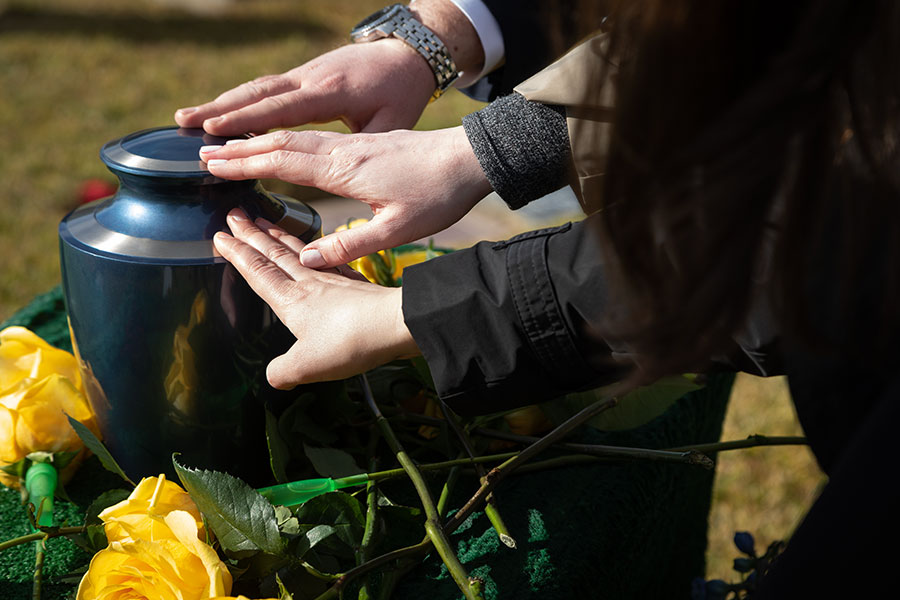
Wrongful Death
The unexpected passing of a loved one is always a profoundly challenging experience, but when a family member’s demise results from another person’s negligence or recklessness, the pain becomes even more unbearable.
When an individual loses their life due to the wrongful actions or gross negligence of another, it is legally referred to as a “wrongful death.” These cases are among the most heart-wrenching, and tragically, they occur far too frequently, often stemming from incidents such as motorcycle accidents.
At Steve Crane Law, attorney Steve Crane and his team deeply empathize with your anguish and sorrow, as some of our attorneys have personally endured the tragedy of accidental death within their own families. We’ve been on both sides of the equation, serving as both clients and attorneys, and our utmost desire is to assist you in navigating the legal aspects that accompany life’s most profound loss.
At Steve Crane Law, attorney Steve Crane and his team handle employment, discrimination and personal injury cases throughout California.
Since 1995, attorney Steve Crane has successfully represented persons like you.
As an experienced lawyer, Steve can gauge when it makes sense to go to court. He knows that a letter or phone call — with proper wording and timing — can be more effective or cost-efficient than suing for damages or injunctive relief.
For those cases that must be presented to a judge or jury, he is eminently qualified to assert your interests.
If you or a loved one has suffered an accidental death, call attorney Steve Crane free. He and his team can assess the facts of your case and help you determine the best course of action to move forward.
To schedule a discrete and confidential consultation about your matter, call attorney Steve Crane free at (888) 855-4400.
What is a “wrongful death”?
California’s wrongful death law, outlined in Code of Civil Procedure 377.60, allows surviving family members or the estate to sue for damages when someone dies as a result of another person’s wrongful act.
A person who commits a wrongful or negligent act against a pregnant person is liable for damages if the act results in a miscarriage or stillbirth.
Under California law wrongful death case is legally classified as a civil tort, which is an act or omission that results in injury or harm to another person.
A wrongful death lawsuit is a type of civil legal action that can be brought by the survivors of a deceased person who died because of a wrongful act or negligence. For someone to succeed in bringing a wrongful death case, they must prove the following elements by a preponderance of the evidence:
- The death of a person;
- Caused by the negligence, or willful intent, of another; and
- The surviving family suffered damages as a result of the death.
A wrongful death claim can arise when one person dies due to the legal fault of another person or entity, including by:
- a negligence-based incident (such as a car accident)
- medical malpractice, or
- an intentional act (including a crime).
As in other types of personal injury lawsuits, in a successful wrongful death case, the defendant’s liability is expressed solely in terms of financial compensation (“damages”) that the court orders the defendant to pay to the deceased person’s survivors or estate. This is one major difference between a wrongful death lawsuit and a criminal homicide case, where a conviction can result in jail or prison time, fines paid to the state, probation, and other penalties.
Who can file a wrongful death lawsuit in California?
The following people can bring a wrongful death lawsuit:
- The decedent’s surviving spouse
- The decedent’s domestic partner
- The decedent’s children
- The children of pre-deceased children
- If there is no surviving issue, the people who would be entitled to the decedent’s property by intestate succession
In cases where someone’s demise is a result of another party’s negligence, the law permits the deceased person’s next of kin and their estate to act as plaintiffs in a civil action aimed at seeking both economic and non-economic damages. This principle holds true even if the deceased individual bore partial responsibility (comparative fault) for the events leading to the fatal incident. In instances where death is a consequence of a drunk driver’s actions, punitive damages may also be granted.
The term “next of kin” encompasses surviving family members, such as a spouse, domestic partner, children, parents, or siblings. They are prioritized in the order specified for making a claim. In cases where a parent passes away, the surviving spouse or partner, as well as the children, may all be eligible to serve as plaintiffs. Additionally, anyone else who would have been likely to receive support if the deceased had continued to live may also have standing to file a claim.
When do I need to file a wrongful death claim?
Surviving family members have two years from the date of the decedent’s death to file a wrongful death claim. However, if the death was caused by medical malpractice, the statute of limitations is three years.What damages can be awarded in a wrongful death lawsuit?
The court can award damages that are just under the circumstances of the case, but they cannot include damages recoverable under the California Civil Code, Section 377.34. The jury cannot consider the plaintiff’s grief, sorrow, mental anguish, pain, and suffering, or their poverty or wealth when awarding non-economic damages.
If you or a loved one has suffered an accidental death, call attorney Steve Crane free. He and his team can assess the facts of your case and help you determine the best course of action to move forward.
To schedule a discrete and confidential consultation about your matter, call attorney Steve Crane free at (888) 855-4400.
Common causes leading wrongful death lawsuits
Many types of accidents can result in wrongful deaths. Unfortunately, California experiences a significant number of preventable fatalities each year, with many occurring on its perilous highways and roads. Common causes of wrongful deaths in California include:
- Commercial Truck Accidents
- Motor Vehicle Accidents
- Motorcycle Accidents
- Drunk Driving Incidents
- Bicycle Accidents
- Pedestrian Accidents
- Cases Involving Defective Products
- Exposure to Toxic Waste
- Medical Malpractice
- Premises-Related Accidents
- Intentional Acts, including murder, manslaughter, arson, and other deliberate actions.
What is the deadline for bringing my wrongful death lawsuit?
You must act promptly after someone dies if you believe that they have died because of someone’s negligence. There are time limits for you to act, called statutes of limitations, which require you to bring a lawsuit within a limited period or risk losing the right to seek a recovery.
Statutes of limitations balance the competing interests of plaintiffs and defendants to provide the plaintiff time to investigate and find an attorney while giving a defendant some assurance that after a period of time, if no action has been brought, they will not be sued. Statutes of limitations in cases of accidental death can be as short as six months (if a governmental agency caused the harm). The time you have to act depends on who caused the accidental death, how it occurred, and where it took place (different states have different statutes of limitations). In California the typical statute of limitations provides two years to bring a lawsuit for negligence but can be as short as 6 months depending on the circumstances.